Boosting Power System Operation Economics via Closed-Loop Predict-Then-Optimize Idea
This is the first project of my Ph.D. career. It aims to sell a closed-loop predict-then-optimize (CPO) idea.
To achieve the lowest operating cost, power system operations generally use an open-loop predict-then-optimize (OPO) process:
- Predict uncertainties, e.g., wind power, as accurately as possible.
- Optimize the operation plan, e.g., unit commitment, using the predictions.
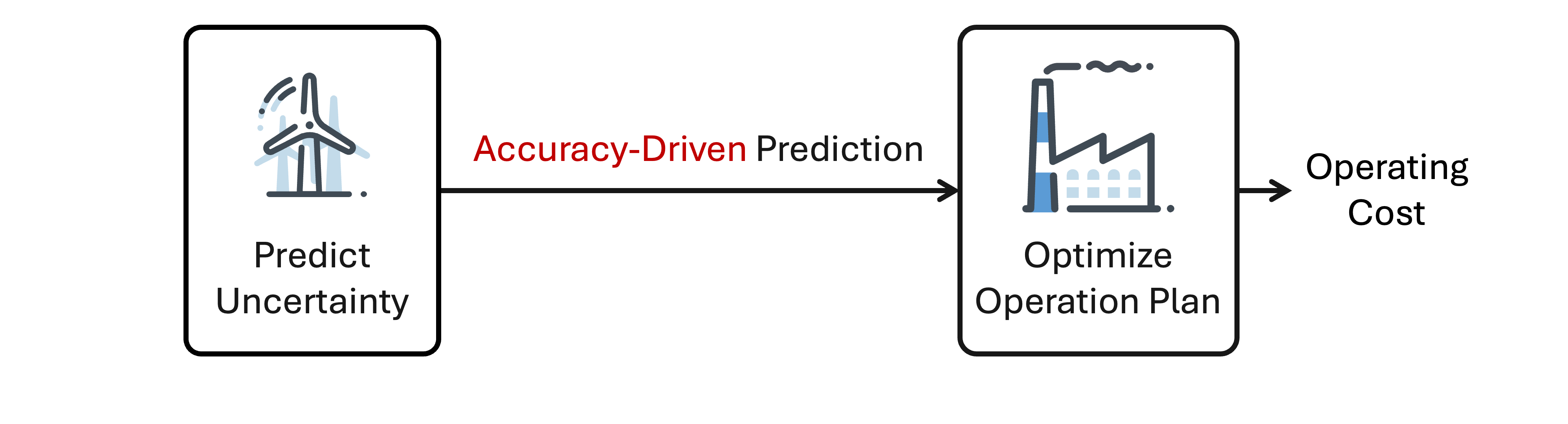
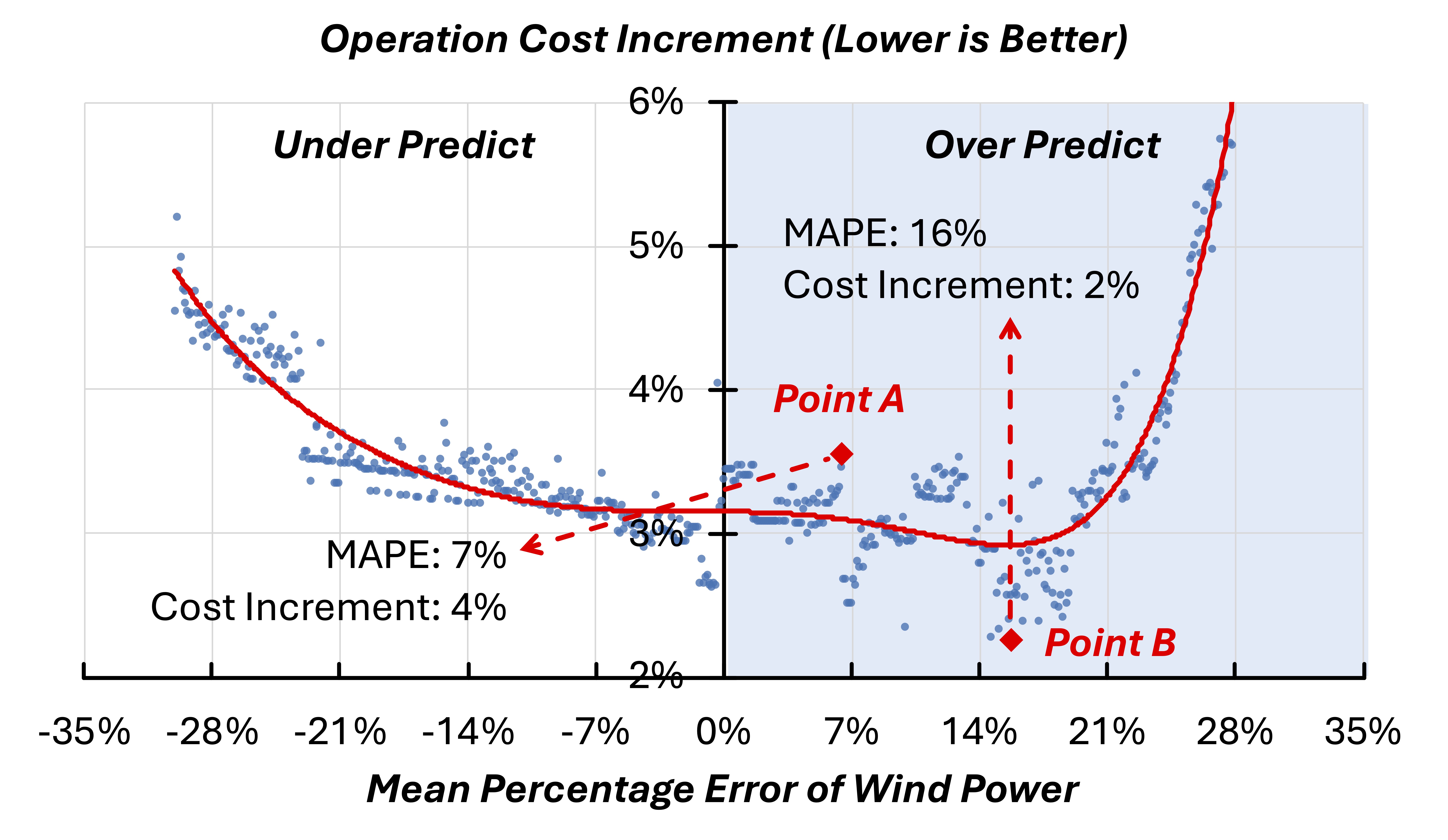
The OPO process does make sense. Yet, due to the nonlinearity and complexity of power systems, the relationship between prediction accuracy and operating cost is non-monotonic and asymmetric. This implies that a more accurate prediction may NOT lead to a lower-cost operating plan.
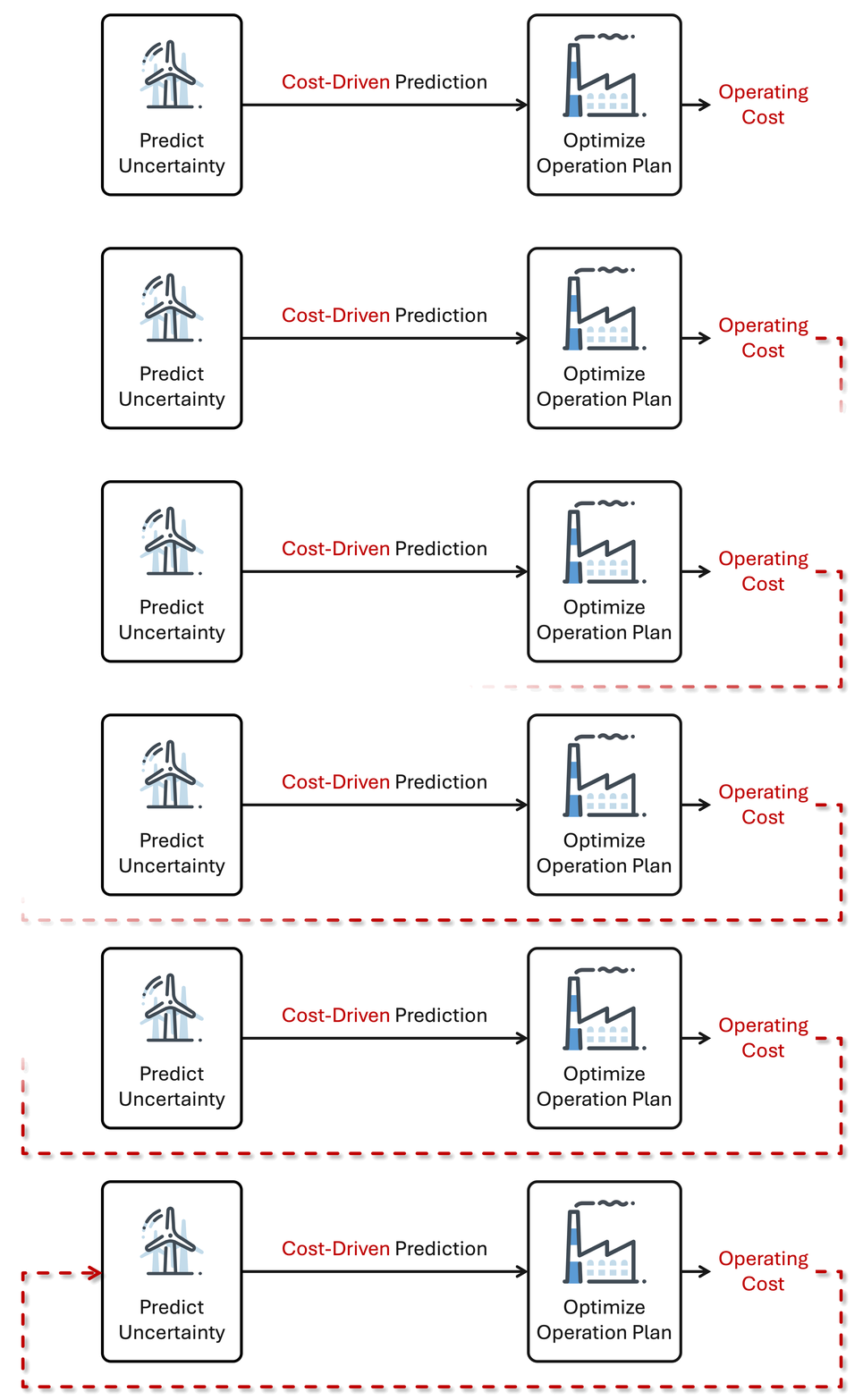
To this end, we are selling you the CPO idea, which features that:
- It feeds the operating cost back to the prediction phase.
- The predictor training evaluates prediction quality via operating costs rather than statistical accuracy criterion (e.g., MAPE).
Related Papers
- [1] Xianbang Chen, Yafei Yang, Yikui Liu, Lei Wu. "Feature-driven economic improvement for network-constrained unit commitment: A closed-loop predict-and-optimize framework," IEEE Transactions on Power Systems, 2021. [PDF »] [Code »]
- [2] Xianbang Chen, Yikui Liu, Lei Wu. "Towards improving unit commitment economics: An add-on tailor for renewable energy and reserve predictions," IEEE Transactions on Sustainable Energy, 2024. [PDF »]